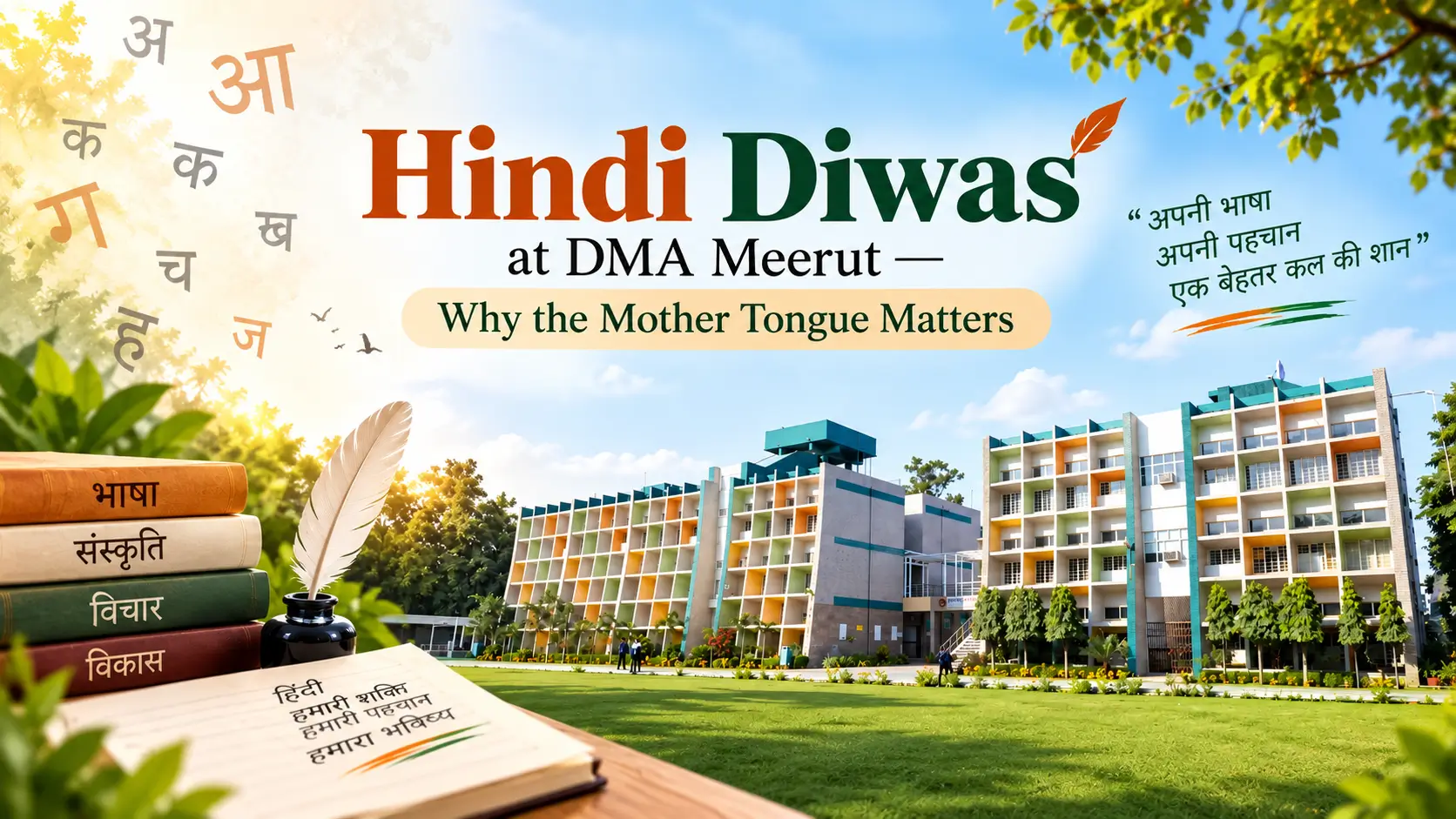
दयावती मोदी अकादमी में हिंदी दिवस
भाषा केवल समय-सारणी में लिखा हुआ एक विषय नहीं होती। वह वही माध्यम है जिसमें बच्चा पहली बार सोचता है, पहली बार तर्क करता है, पहली बार हँसी-ठिठोली करता है और पहली बार यह समझता है कि वह स्वयं कौन है।
संक्षेप में उत्तर
हिंदी दिवस देवनागरी लिपि में लिखी हिंदी को संघ की राजभाषा के रूप में स्वीकार किए जाने की स्मृति में मनाया जाता है — यही व्यवस्था आगे चलकर संविधान के अनुच्छेद 343 में सम्मिलित हुई। दयावती मोदी अकादमी में इसे तीन दिनों तक मनाया जाता है, ताकि प्राइमरी, मिडिल और सीनियर विंग — तीनों — अपनी आयु के अनुरूप गहराई के साथ भाषा से जुड़ सकें।
अंग्रेज़ी हमारे बच्चों के लिए संसार भर के द्वार खोलती है। हिंदी उनके अपने घर, अपने साहित्य और अपने भीतर की आवाज़ का द्वार खुला रखती है। एक सुशिक्षित भारतीय बच्चे को दोनों चाहिए — और एक को दूसरी की क़ीमत पर नहीं।
हिंदी दिवस का महत्व
हिंदी दिवस भारत की संविधान सभा के उस निर्णय की स्मृति है जिसमें देवनागरी लिपि में लिखी हिंदी को संघ की राजभाषा के रूप में स्वीकार किया गया — यह प्रावधान आगे चलकर संविधान के अनुच्छेद 343 में सम्मिलित हुआ। यह गणराज्य की नींव रखते समय लिया गया एक सुविचारित निर्णय था और आधुनिक भारत के भाषिक इतिहास के निर्णायक क्षणों में गिना जाता है।
किंतु यह आयोजन उस एक संवैधानिक तथ्य से कहीं बड़ा है। हिंदी के पास वह साहित्यिक विरासत है जो कबीर और तुलसीदास से होते हुए भारतेंदु हरिश्चंद्र, प्रेमचंद, निराला, महादेवी वर्मा, दिनकर और हरिवंश राय बच्चन तक चली आती है। यह भारत की पत्रकारिता, सिनेमा, लोक परंपरा और रोज़मर्रा के व्यवहार के एक बहुत बड़े हिस्से की भाषा है, और देश के एक बड़े भाग में किसी न किसी रूप में बोली जाती है।
हिंदी दिवस इसलिए है क्योंकि जिस भाषा को सचेत रूप से मूल्य नहीं दिया जाता, वह धीरे-धीरे केवल बोलचाल की भाषा बनकर रह जाती है — घर में निर्देश देने के लिए प्रयोग होती है, पर सोचने, पढ़ने या गहराई से लिखने के लिए नहीं। यह दिवस राष्ट्रीय स्तर पर यह स्मरण कराता है कि मातृभाषा भी उतनी ही गंभीरता की अधिकारी है जितनी कोई अन्य विद्या।
दयावती मोदी अकादमी में इसका महत्व क्यों है
डीएमए पश्चिमी उत्तर प्रदेश के हृदय में स्थित है — ऐसे क्षेत्र में जहाँ हिंदी दूसरी भाषा नहीं, बल्कि घर की, परिवार की, बाज़ार की और स्मृति की पहली भाषा है। हमारे अनेक विद्यार्थी सोचते हिंदी में हैं और लिखते अंग्रेज़ी में हैं। पहली भाषा को सशक्त करना सीधे-सीधे दूसरी भाषा को सशक्त करता है।
एक सीबीएसई विद्यालय के रूप में हम उस राष्ट्रीय ढाँचे के भीतर कार्य करते हैं जिसने बहुभाषिकता को घोषित शैक्षिक लक्ष्य बनाया है। राष्ट्रीय शिक्षा नीति स्पष्ट कहती है कि मातृभाषा में प्रवीणता अंग्रेज़ी की दक्षता से प्रतिस्पर्धा नहीं करती, बल्कि उसे सहारा देती है — और हमारा शैक्षणिक अनुभव भी यही कहता है। जिन बच्चों का हिंदी शब्द-भंडार समृद्ध होता है, वे तेज़ी से समझते हैं, अवधारणाओं का अधिक सटीक अनुवाद कर पाते हैं और विज्ञान सहित हर विषय में अधिक सूक्ष्मता से अपनी बात रख पाते हैं।
एक सांस्कृतिक तर्क भी है, और वह छोटा नहीं है। जो बच्चा अपने दादा-दादी की भाषा पढ़ नहीं सकता, वह अपने ही परिवार की स्मृति के एक बड़े हिस्से से कट जाता है। विद्यालय के कैलेंडर में हिंदी को सम्मान का स्थान देना हर विद्यार्थी को यह स्पष्ट कर देता है कि उसकी घर की भाषा विद्यालय के द्वार के भीतर भी उतनी ही अपनी है, केवल बाहर की नहीं।
हमारे बच्चों पर इसका प्रभाव
सटीक अभिव्यक्ति
समृद्ध हिंदी शब्द-भंडार बच्चे को अपने भाव और विचार के लिए अधिक सटीक शब्द देता है — यही किसी भी भाषा में स्पष्ट लेखन की नींव है।
गहरी समझ
मातृभाषा में समझी गई अवधारणा जड़ तक समझ में आती है। अंग्रेज़ी तब पहले से समझे हुए विचार का दूसरा नाम भर रह जाती है।
परीक्षा में बेहतर प्रदर्शन
गंभीरता से पढ़ी जाए तो हिंदी बोर्ड का अंक दिलाने वाला विषय है। आज बनी पढ़ने की आदत गद्यांश, व्याकरण और लेखन के अंकों में सीधे दिखती है।
पीढ़ियों से जुड़ाव
जो बच्चे सहजता से हिंदी पढ़ते-लिखते हैं, वे दादा-दादी, संबंधियों और पड़ोसियों से बिना किसी दीवार के बात कर पाते हैं।
बिना संकोच आत्मविश्वास
विद्यार्थी समझते हैं कि अच्छी हिंदी बोलना शिक्षा की कमी नहीं, उसका प्रमाण है। यह आत्मविश्वास बच्चे के पूरे व्यक्तित्व को बदल देता है।
साहित्य में रुचि
सही आयु में प्रेमचंद या महादेवी वर्मा से हुआ परिचय पढ़ने की वह आदत जगा सकता है जो कोई पाठ्यक्रम ज़बरदस्ती नहीं बना सकता।
मानसिक लचीलापन
दो भाषाओं के बीच सहजता से आना-जाना ध्यान, स्मृति और समस्या-समाधान की क्षमता बढ़ाता है, जिसका लाभ हर विषय में मिलता है।
अवसरों का विस्तार
मीडिया, प्रशासन, विधि, प्रकाशन, अनुवाद और लोक सेवा — पूरे भारत में हिंदी पर सच्चा अधिकार अवसर देता है।
निज भाषा में सोचना, पढ़ना और लिखना ही सच्ची शिक्षा की नींव है।
हिंदी दिवस का मूल भाव
अक्सर पूछे जाने वाले प्रश्न
हिंदी दिवस किस अवसर की स्मृति में मनाया जाता है?
भारत की संविधान सभा के उस निर्णय की स्मृति में, जिसमें देवनागरी लिपि में लिखी हिंदी को संघ की राजभाषा के रूप में स्वीकार किया गया — यह प्रावधान आगे चलकर संविधान के अनुच्छेद 343 में सम्मिलित हुआ।
एक अंग्रेज़ी माध्यम सीबीएसई विद्यालय हिंदी को इतना महत्व क्यों देता है?
क्योंकि दोनों भाषाएँ एक-दूसरे की प्रतिस्पर्धी नहीं, सहयोगी हैं। जिन बच्चों का हिंदी शब्द-भंडार समृद्ध होता है, वे तेज़ी से समझते हैं और हर विषय में अधिक सूक्ष्मता से अपनी बात रखते हैं। राष्ट्रीय शिक्षा नीति भी स्पष्ट कहती है कि मातृभाषा में प्रवीणता अंग्रेज़ी की दक्षता को मज़बूत करती है।
हिंदी शैक्षणिक प्रदर्शन में किस प्रकार सहायक है?
मातृभाषा में समझी गई अवधारणा जड़ तक समझ में आती है, इसलिए अंग्रेज़ी पहले से समझे हुए विचार का दूसरा नाम भर रह जाती है। गंभीरता से पढ़ी जाए तो हिंदी बोर्ड का अंक दिलाने वाला विषय भी है, और आरंभ में बनी पढ़ने की आदत गद्यांश, व्याकरण और लेखन के अंकों में सीधे दिखाई देती है।
क्या इसका कोई सांस्कृतिक पक्ष भी है?
बहुत बड़ा पक्ष है। जो बच्चा अपने दादा-दादी की भाषा नहीं पढ़ सकता, वह अपने ही परिवार की स्मृति के एक बड़े हिस्से से और कबीर तथा तुलसीदास से लेकर प्रेमचंद, निराला और महादेवी वर्मा तक चली आती साहित्यिक विरासत से वंचित रह जाता है।
हम प्रत्येक डीएमए परिवार से आग्रह करते हैं कि घर पर हिंदी पढ़ने की परंपरा जीवित रखें। दयावती मोदी अकादमी — अपनी भाषा में जड़ें, संसार के लिए तैयार।
Hindi Diwas at Dayawati Modi Academy
A language is not merely a subject on the timetable. It is the medium in which a child first thinks, first argues, first jokes and first understands who they are.
Quick answer
Hindi Diwas commemorates the adoption of Hindi in the Devanagari script as an official language of the Union, later carried into Article 343 of the Constitution. At Dayawati Modi Academy it is observed across three days so that the Primary, Middle and Senior Wings can each engage with the language at a depth suited to their age group.
English opens doors for our children across the world. Hindi keeps open the door to their own home, their own literature and their own inner voice. A well-educated Indian child needs both, and needs neither at the cost of the other.
The significance of Hindi Diwas
Hindi Diwas commemorates the decision of the Constituent Assembly of India to adopt Hindi, written in the Devanagari script, as an official language of the Union — a provision later carried into Article 343 of the Constitution. It was a considered choice made at the founding of the Republic, and it remains one of the defining moments in modern India's linguistic history.
The observance is far larger than that single constitutional fact. Hindi carries a literary inheritance that runs from Kabir and Tulsidas through Bharatendu Harishchandra to Premchand, Nirala, Mahadevi Verma, Dinkar and Harivansh Rai Bachchan. It is the language of a very large share of India's journalism, cinema, folk tradition and everyday commerce, and it is spoken in one form or another by a substantial part of the country.
Hindi Diwas exists because a language that is not consciously valued gradually becomes a language that is only casually spoken — used for instructions at home, but never for thinking, reading or writing with any depth. The day is a national reminder that the mother tongue deserves the same seriousness we give to any other discipline.
Why it matters at Dayawati Modi Academy
DMA sits in the heart of western Uttar Pradesh, in a region where Hindi is not a second language but the first language of home, of family, of the market and of memory. Many of our students think in Hindi and then write in English. Strengthening the first language directly strengthens the second.
As a CBSE school we also work within a national framework that has made multilingualism a stated educational goal. The National Education Policy is explicit that fluency in the mother tongue supports rather than competes with proficiency in English, and our academic experience bears this out. Children with a strong Hindi vocabulary comprehend faster, translate concepts more accurately and express themselves with more nuance in every subject, including the sciences.
There is a cultural argument as well, and it is not a small one. A child who cannot read the language of their grandparents loses access to a large portion of their own family's memory. Giving Hindi a place of honour in the school calendar makes clear to every student that their home language belongs inside the school gates and not only outside them.
The impact on our children
Sharper expression
A larger Hindi vocabulary gives a child more precise words for what they feel and think — the foundation of clear writing in any language.
Stronger comprehension
Concepts understood in the mother tongue are understood at the root. English then becomes a second label for an idea already grasped.
Better examination performance
Hindi is a scoring board subject when taken seriously. Reading habits built now show directly in comprehension, grammar and writing marks.
Connection across generations
Children who read and write Hindi comfortably can speak with grandparents, relatives and neighbours without a barrier in between.
Confidence without apology
Students learn that speaking Hindi well is a mark of education, not a shortfall in it. That confidence changes how a child carries themselves.
A literary appetite
An introduction to Premchand or Mahadevi Verma at the right age can begin a lifetime of reading no syllabus could have forced.
Cognitive flexibility
Moving fluently between two languages develops attention, memory and problem-solving in ways that benefit every subject.
A widening of opportunity
Media, administration, law, publishing, translation and public service across India all reward genuine command of Hindi.
निज भाषा में सोचना, पढ़ना और लिखना ही सच्ची शिक्षा की नींव है।
To think, read and write in one's own language is the true foundation of education
Frequently asked questions
What does Hindi Diwas commemorate?
The decision of the Constituent Assembly of India to adopt Hindi, written in the Devanagari script, as an official language of the Union — a provision later carried into Article 343 of the Constitution.
Why does an English-medium CBSE school give Hindi this importance?
Because the two languages support rather than compete with each other. Children with a strong Hindi vocabulary comprehend faster and express themselves with more nuance in every subject, and the National Education Policy is explicit that mother-tongue fluency strengthens proficiency in English.
How does Hindi help academic performance?
Concepts understood in the mother tongue are understood at the root, so English becomes a second label for an idea already grasped. Hindi is also a scoring board subject when taken seriously, and reading habits built early show directly in comprehension, grammar and writing marks.
Is there a cultural argument as well?
A significant one. A child who cannot read the language of their grandparents loses access to a large part of their own family's memory, and to a literary inheritance running from Kabir and Tulsidas through Premchand, Nirala and Mahadevi Verma.
We encourage every DMA family to keep Hindi reading alive at home. Dayawati Modi Academy — rooted in our language, ready for the world.