The Right Way to Communicate with Fellow Teachers, Colleagues, Parents, and Students
- Categories Blog
- Tags active listening in education, classroom communication, communication with parents, educational leadership, effective communication in education, parent teacher relationship, positive school culture, professional communication, respectful communication, school community, student engagement, student motivation, teacher collaboration, teacher communication skills
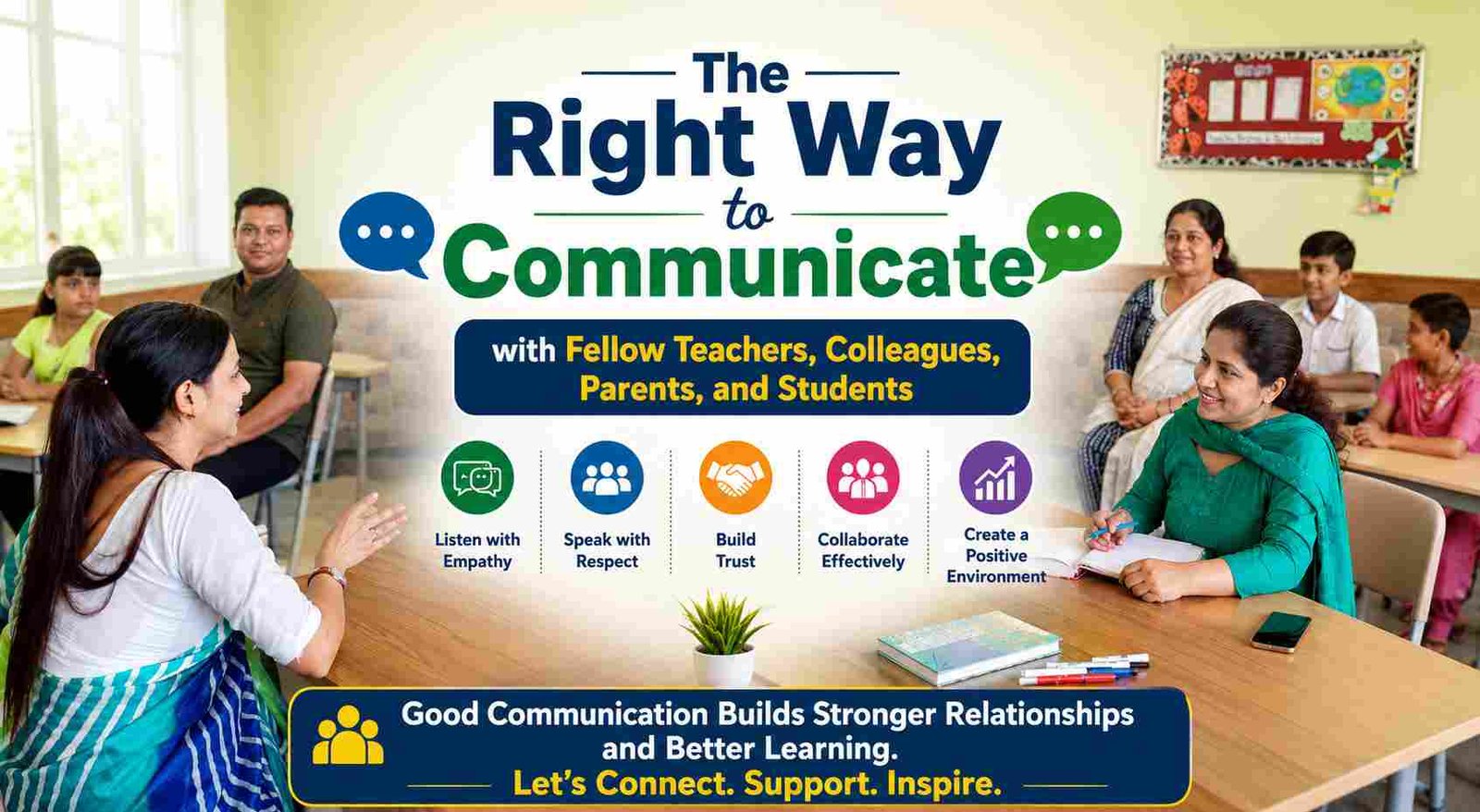
Effective communication is the foundation of a positive and productive educational environment. The way educators communicate with fellow teachers, colleagues, parents, and students plays a crucial role in building strong relationships within the school community. The words we choose, the tone we adopt, and the respect we show through our interactions greatly influence trust, cooperation, and mutual understanding. Whether communicating in person, through meetings, emails, or classroom discussions, using encouraging vocabulary and courteous language helps create a supportive and respectful learning environment where everyone can thrive.
Communicating with Fellow Teachers and Colleagues
Teachers and school staff work as a team to achieve common educational goals. Positive communication strengthens professional relationships and promotes a supportive workplace culture.
Key Principles
1. Show Respect and Appreciation
Acknowledge the efforts and contributions of colleagues. Simple expressions such as “Thank you,” “I appreciate your support,” and “Your idea is valuable” help build goodwill and teamwork.
2. Practice Active Listening
Effective communication is not only about speaking but also about listening attentively. Give colleagues an opportunity to express their views and demonstrate genuine interest in their opinions.
3. Use Positive and Constructive Language
When offering feedback, focus on solutions rather than criticism. Instead of saying, “This won’t work,” consider saying, “Let’s explore another approach that may be more effective.”
4. Maintain Professional Courtesy
Greetings, polite requests, and respectful responses create a pleasant working atmosphere. Phrases such as “Could you please help me with this?” and “May I suggest an alternative?” promote collaboration.
Encouraging Vocabulary for Colleagues
- Excellent work
- Well done
- I appreciate your effort
- Thank you for your contribution
- That’s a great idea
- Let’s work together
- I value your opinion
- Your support is appreciated
- Congratulations on your achievement
Communicating Effectively with Parents
Parents are a child’s first teachers and play a crucial role in supporting their educational journey. Positive communication between teachers and parents builds trust, encourages collaboration, and ultimately benefits student learning and well-being.
Key Principles
1. Establish a Partnership
Approach every interaction with parents as a partnership focused on the child’s success. Use language that emphasizes working together.
Examples:
- “Let’s work together to support your child’s progress.”
- “Your involvement is valuable to your child’s learning.”
2. Begin with Positives
When discussing a student, start by highlighting strengths and achievements before addressing concerns.
Examples:
- “Your child has shown great enthusiasm in class.”
- “I appreciate the effort your child is making.”
3. Communicate with Respect and Empathy
Parents may have different perspectives and concerns. Listening patiently and responding respectfully helps build understanding and trust.
4. Be Clear and Constructive
When discussing challenges, focus on solutions and improvement rather than blame.
Examples:
- “We have noticed some difficulties in completing assignments. Together, we can develop strategies to help.”
- “With continued support at home and school, I am confident that improvement is possible.”
5. Express Gratitude
Recognize parents’ efforts and cooperation.
Examples:
- “Thank you for your support.”
- “I appreciate your time and involvement.”
- “Your partnership makes a positive difference.”
Encouraging Vocabulary for Parents
- We appreciate your support.
- Thank you for your cooperation.
- Together we can help your child succeed.
- Your involvement is valued.
- We are pleased with your child’s progress.
- I welcome your suggestions and feedback.
- Let us continue working together.
Communicating Positively with Students
Students thrive in an environment where they feel respected, encouraged, and understood. Positive communication enhances motivation, confidence, and academic success.
Key Principles
1. Speak with Encouragement
Students respond positively when their efforts are recognized. Focus on progress rather than perfection.
Examples:
- “You’re making good progress.”
- “Keep trying; you’re getting closer.”
- “I believe in your abilities.”
- “That’s a creative solution.”
2. Use Respectful and Courteous Language
Courtesy teaches students how to communicate respectfully with others. Words such as “please,” “thank you,” and “excuse me” model appropriate behavior.
3. Provide Constructive Feedback
Correct mistakes in a supportive manner. Instead of highlighting failure, guide students toward improvement.
For example:
- Instead of: “This is wrong.”
- Say: “Let’s look at another way to solve this.”
4. Encourage Participation
Invite students to share ideas and opinions without fear of criticism.
Examples:
- “That’s an interesting perspective.”
- “Thank you for sharing your thoughts.”
- “Can you tell us more about your idea?”
5. Promote Confidence and Growth
Students need reassurance that learning involves effort and continuous improvement.
Examples:
- “Every mistake is an opportunity to learn.”
- “Your hard work is paying off.”
- “You should be proud of your progress.”
The Power of Courtesy in Education
Courtesy is more than good manners; it is a powerful tool for creating a respectful learning community. When teachers consistently use polite and encouraging language, students, parents, and colleagues are more likely to respond positively and constructively.
A courteous school culture contributes to:
- Stronger relationships among teachers, parents, and students
- Increased student engagement and motivation
- Reduced conflicts and misunderstandings
- Greater trust and cooperation
- A positive, inclusive, and supportive learning environment
Conclusion
The way educators communicate has a lasting impact on the school community. By choosing positive, encouraging, and courteous language, teachers can strengthen professional relationships with colleagues, build meaningful partnerships with parents, and inspire confidence and motivation in students. Effective communication is not merely about exchanging information; it is about building relationships that nurture learning, growth, and success for everyone involved in education.
Tag:active listening in education, classroom communication, communication with parents, educational leadership, effective communication in education, parent teacher relationship, positive school culture, professional communication, respectful communication, school community, student engagement, student motivation, teacher collaboration, teacher communication skills
Official updates, results, and insights from Dayawati Modi Academy — Best CBSE School in Meerut since 1981.