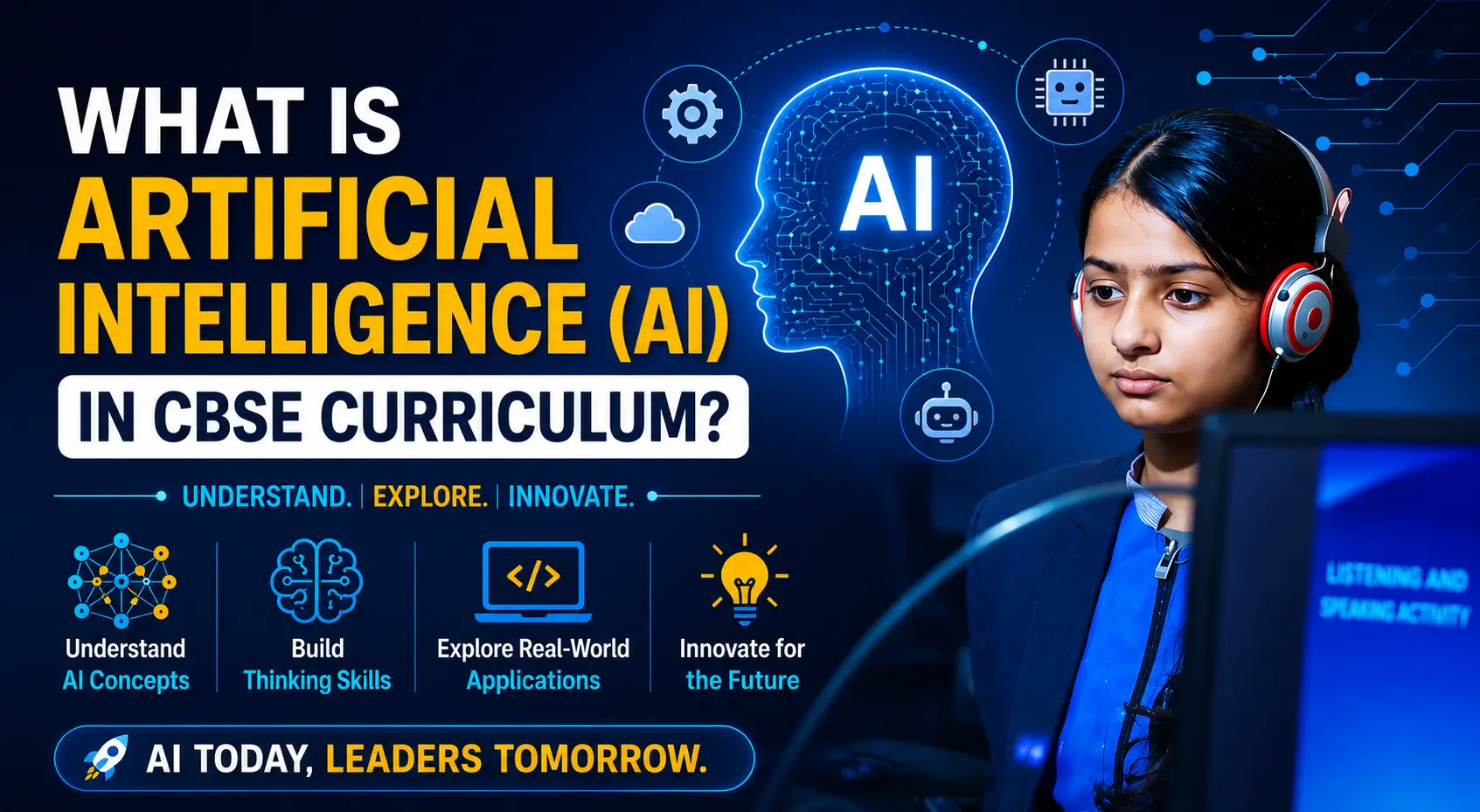
What Is Artificial Intelligence (AI) in CBSE Curriculum? Complete Guide for Parents 2026
- Categories Blog
- Tags AI Curriculum CBSE, AI for Students, AI in Education, AI Learning for Children, Artificial Intelligence in Schools, CBSE AI Code 417, CBSE Artificial Intelligence, Computational Thinking, Dayawati Modi Academy, Digital Learning in Schools, Future Skills Education, Machine Learning Basics, NEP 2020 and AI, Python Programming for Students
Introduction
Artificial Intelligence — once a term reserved for science fiction and research labs — is now part of your child’s school timetable. If your son or daughter studies in a CBSE school, chances are they are already encountering AI as part of their curriculum. But what exactly does that mean? What will they learn? And why does it matter for their future?
At Dayawati Modi Academy (DMA), Meerut’s leading CBSE school, we believe informed parents make the best decisions for their children. This guide walks you through everything you need to know about Artificial Intelligence in the CBSE curriculum — in plain, simple language.
What Is Artificial Intelligence (AI)?
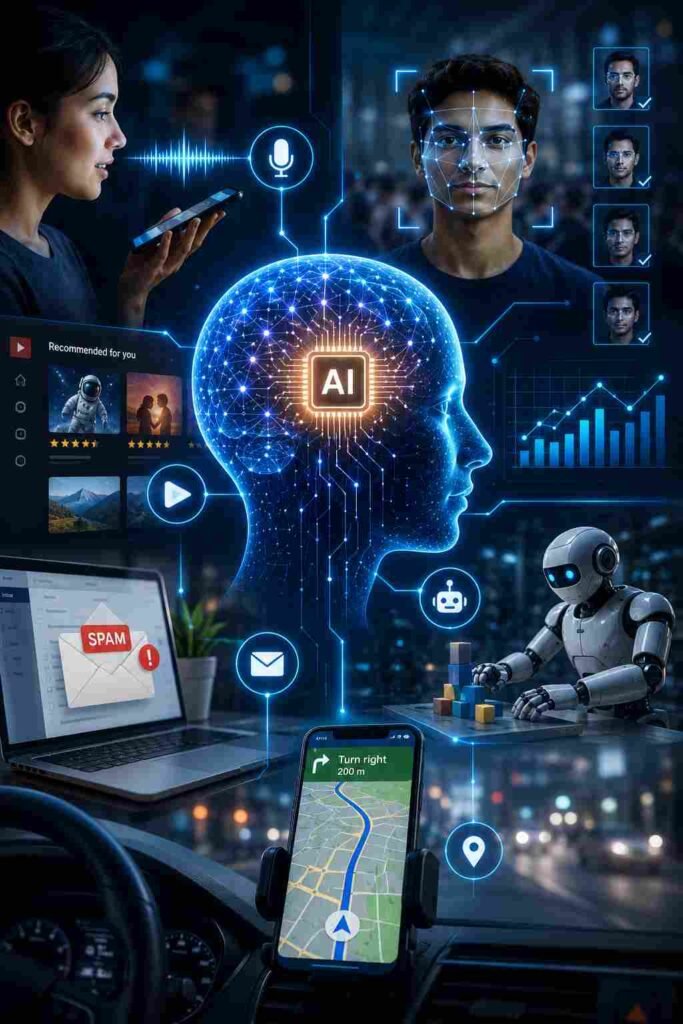
Artificial Intelligence, or AI, refers to the ability of computer systems to perform tasks that normally require human intelligence. These tasks include:
- Understanding natural language (like Siri or Google Assistant)
- Recognising images and faces
- Making predictions based on patterns
- Learning from experience (called Machine Learning)
- Solving complex problems faster than humans
In simpler terms, AI is about making machines ‘smart’. It is behind the recommendations you see on YouTube, the spam filter in your email, and even the navigation in Google Maps.
Why Did CBSE Introduce AI in Schools?
The Central Board of Secondary Education (CBSE) introduced Artificial Intelligence as a subject in 2019, making India one of the first countries in the world to include AI in school education at this scale. The reasons are clear:
- India’s digital economy is growing rapidly, and AI skills are in high demand.
- The World Economic Forum projects that AI-related jobs will be among the most sought-after by 2030.
- Early exposure to AI thinking helps students develop logical reasoning and problem-solving skills.
- CBSE aligns with the National Education Policy (NEP) 2020, which emphasises 21st-century skills.
By introducing AI at the school level, CBSE ensures that Indian students are competitive globally, not just locally.
Which Classes Study AI Under CBSE?
CBSE has incorporated AI across multiple grade levels:
- Class 6, 7, 8: AI as part of integrated learning — basic concepts, digital tools, and computational thinking.
- Class 9 & 10: AI as a dedicated skill subject (Code 417) — covering project-based learning, Python basics, data literacy, and real-world AI applications.
- Class 11 & 12: AI as an elective subject — deeper study including machine learning, neural networks, and career pathways.
This structured approach ensures students build knowledge gradually — from understanding what AI is, to actually working with AI tools.
What Will My Child Actually Learn?
The CBSE AI curriculum is designed to be practical and engaging. At each stage, students work on:
Foundational Concepts
- What is AI, Machine Learning, and Deep Learning
- History and evolution of AI
- Ethical use of AI and responsible technology
Data and Tools
- Basics of Python programming
- Data collection and analysis
- Introduction to datasets and how AI ‘learns’ from data
Project-Based Learning
- Creating simple AI models
- Designing solutions for real-world problems
- Presenting projects through CBSE’s AI curriculum assessments
At DMA, our teachers undergo specialised training to ensure this curriculum is delivered effectively, blending classroom theory with hands-on digital practice.
Is AI Compulsory or Optional in CBSE?
This is one of the most common questions parents ask. Here is the clear answer:
- Class 6–8: AI concepts are woven into existing subjects — not a standalone exam subject.
- Class 9–10: AI (Code 417) is offered as a Skill Subject. Students can choose it as a 6th optional subject, meaning it does not replace core subjects like Maths or Science.
- Class 11–12: AI is available as an elective for students interested in technology or science streams.
At DMA, we guide parents and students in making the right subject choices based on their child’s interests and future career goals. Our counsellors are available to help at every step.
How Does AI in School Benefit Your Child?
Beyond marks and grades, studying AI in school gives children a significant edge:- Critical Thinking: AI projects teach children to break down problems logically.
- Career Readiness: Tech companies, banks, hospitals, and even farms now use AI. Your child will be prepared for any sector.
- Higher Education Edge: Students with AI knowledge find it easier to pursue engineering, data science, or business analytics degrees.
- Entrepreneurship: AI literacy gives young minds the tools to build their own tech solutions.
- Global Competitiveness: As AI becomes universal, Indian students with early exposure will compete confidently on a global stage.
DMA’s Approach to AI Education
At Dayawati Modi Academy, we go beyond the textbook. Our AI education approach includes:- Smart classrooms equipped with digital learning tools
- Trained CBSE AI faculty who use project-based teaching methods
- Guest lectures and workshops with technology professionals
- Student AI projects showcased at inter-school events
- Parent orientation sessions on understanding AI education
We believe that education should prepare children not just for today’s exams, but for tomorrow’s world. AI education is central to that mission.
What Should Parents Do Right Now?
If your child is currently in Class 5, 6, or 7, here is what we recommend:
- Talk to your child’s class teacher about AI learning opportunities available.
- Encourage your child to explore free AI tools like Google Teachable Machine or Scratch AI extensions at home.
- Attend DMA’s parent orientation workshops to understand how AI will impact your child’s academic journey.
- When choosing Class 9 subjects, consider AI (Code 417) if your child shows interest in technology, science, or problem-solving.
Frequently Asked Questions
Q1: What is Artificial Intelligence in the CBSE curriculum?
Artificial Intelligence (AI) in CBSE curriculum refers to the structured subject and integrated learning modules where students learn about AI concepts, data, tools like Python, and real-world applications. It is taught from Class 6 onwards, with a dedicated skill subject (Code 417) available in Classes 9 and 10.
Q2: Is AI compulsory for all CBSE students?
No. AI is optional for Class 9–10 students as a 6th skill subject and an elective for Classes 11–12. For Classes 6–8, AI concepts are integrated into existing subjects. Schools like DMA offer guidance on whether this subject suits your child.
Q3: Does studying AI in school help with engineering entrance exams?
Directly, AI does not appear in JEE or NEET syllabi. However, the logical thinking, data analysis, and programming skills developed through AI education significantly support performance in competitive examinations and engineering/tech degree programmes.
Q4: Which schools in Meerut offer CBSE AI subject?
Dayawati Modi Academy (DMA) in Modipuram, Meerut is among the leading CBSE schools offering AI as a skill subject. DMA has trained faculty and smart classrooms to support quality AI education.
Q5: At what age should my child start learning AI?
CBSE introduces AI concepts from Class 6 (around age 11–12). However, basic computational thinking and digital literacy — which build AI readiness — can start even earlier. DMA’s curriculum addresses these foundations from primary grades.
About Dayawati Modi Academy
Dayawati Modi Academy (DMA) is a premier CBSE-affiliated school located in Modipuram, Meerut, Uttar Pradesh. Committed to holistic, future-ready education, DMA integrates modern subjects like Artificial Intelligence with strong academic foundations. For admissions or queries, visit www.dma1.in or call our admissions team.
Tag:AI Curriculum CBSE, AI for Students, AI in Education, AI Learning for Children, Artificial Intelligence in Schools, CBSE AI Code 417, CBSE Artificial Intelligence, Computational Thinking, Dayawati Modi Academy, Digital Learning in Schools, Future Skills Education, Machine Learning Basics, NEP 2020 and AI, Python Programming for Students

Official updates, results, and insights from Dayawati Modi Academy — Best CBSE School in Meerut since 1981.
Previous post
The Right Way to Communicate with Fellow Teachers, Colleagues, Parents, and Students
You may also like
AI in Education Schools Still Matter
Best School in Meerut 2026 | Why DMA Tops Every List