CBSE AI Curriculum 2026: Everything Parents Should Know
Table of Contents
- The Big Change — AI Is Now Part of Every Child’s Learning
- How AI Is Actually Taught in School
- What Your Child Will Learn — By Age Group
- Assessment and Exams — What Parents Worry About Most
- Teacher Training and School Readiness
- Ethical and Safe Use of AI
- Do Children Need Coding or Laptops?
- Why CBSE Introduced AI — The Real Reason
- Common Myths Parents Should Stop Believing
- What Parents Should Actually Do
- Summary
- FAQ — CBSE AI Curriculum 2026
Artificial Intelligence is no longer a subject reserved for engineering colleges or tech professionals. In 2026, CBSE — India’s largest school board — has formally integrated AI and Computational Thinking into the school curriculum starting from Class 3. For millions of parents across India, and particularly in cities like Meerut, this raises an important question: What does this actually mean for my child?
This guide, prepared by the academic team at Dayawati Modi Academy, Meerut — one of Meerut’s leading CBSE schools — answers every question a parent needs to ask in 2026.
1. The Big Change — AI Is Now Part of Every Child’s Learning
The most significant shift in the CBSE AI curriculum for 2026 is straightforward: Artificial Intelligence and Computational Thinking (CT) are no longer optional. From Class 3 onwards, every student in a CBSE-affiliated school will encounter AI as part of their regular schooling.
| Classes | AI Status | Format |
|---|---|---|
| Class 3 – 8 | COMPULSORY | Integrated into existing subjects |
| Class 9 – 10 | Optional (Elective) | Skill / elective subject |
| Class 11 – 12 | Optional Subject | Like Informatics Practices — advanced ML, data, AI ethics |
Important for Parents: This change is mandated by NEP 2020 + NCF 2023. It does NOT mean heavy coding, extra coaching, or marks pressure. AI is being treated as a life skill — similar to how reading and basic arithmetic are taught.
2. How AI Is Actually Taught in School
One of the most common misunderstandings among parents is that AI is taught as a separate, heavy subject with its own textbook and exam. This is not the case in Classes 3–8.
There is no separate AI subject and no board examination for AI in Classes 3 to 8. Instead, CBSE AI and Computational Thinking are woven directly into subjects your child is already studying.
| Subject | How AI Is Integrated |
|---|---|
| Mathematics | Pattern recognition, logical sequences, algorithmic thinking |
| Science | Real-life AI applications, how machines sense and respond |
| Social Science | Data in society, AI’s role in communities and governance |
| Languages | Logical thinking, structured problem-solving through storytelling |
3. What Your Child Will Learn — By Age Group
The CBSE AI curriculum follows a well-structured, age-appropriate progression. Here is a clear breakdown of what is taught at each stage:
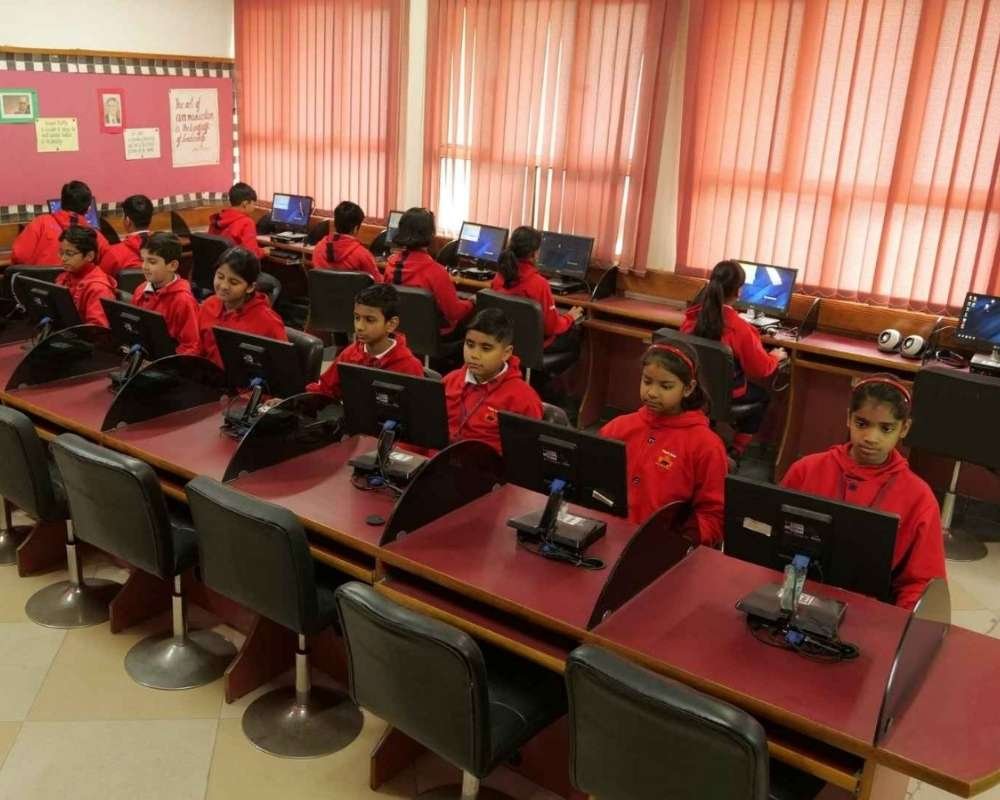
Classes 3–5 | Foundation Stage | ~50 hours/year |
✓ Logical thinking through patterns and puzzles |
✓ Breaking complex problems into smaller steps (decomposition) |
✓ Basic understanding of ‘how computers think’ |
✓ Teaching style: games, stories, and fun activities — no textbook pressure |
Classes 6–8 | Middle Stage | Up to ~100 hours/year |
✓ Introduction to core AI concepts |
✓ How machines learn — at a basic, accessible level |
✓ Working with data and understanding fairness in AI |
✓ Real-world AI use cases and simple AI projects |
✓ Increased hands-on and project-based activities |
Classes 9–10 | Secondary Stage | Optional — Skill/Elective Subject |
✓ AI is not compulsory at this stage (as of 2026–27) |
✓ Available as an elective or skill subject in many schools |
✓ Many CBSE schools — including DMA — already offer AI at this level |
Classes 11–12 | Senior Secondary Stage | Optional Subject |
✓ AI offered as an optional subject (similar to Informatics Practices) |
✓ Topics include: Machine Learning basics, data handling, AI ethics |
✓ Prepares students for AI-related higher education and careers |
4. Assessment and Exams — What Parents Worry About Most
This is the question most parents ask first — and the answer will reassure you.
Stage | How AI Is Assessed |
Classes 3–8 | No board exams. Project-based and activity-based evaluation only. Focus is on thinking skills, creativity, and problem-solving. |
Classes 9–12 (optional) | Standard CBSE assessment for elective subjects — theory + practicals where applicable. |
Bottom Line for Parents: Marks pressure from AI is low, especially in Classes 3–8. The system is deliberately designed to build curiosity and skills — not to stress children or burden parents with coaching costs.
5. Teacher Training and School Readiness
A natural concern for parents is: are teachers actually prepared for this? CBSE has proactively launched a comprehensive training initiative for school faculty across India, covering:
- In-person and online professional development workshops
- School-level AI activity modules and ready-made resources
- Ongoing digital literacy programmes for teaching staff
Schools that are ahead of this transition — like Dayawati Modi Academy, Meerut — are already integrating AI tools, smart classrooms, and project-based learning into everyday instruction. Check the DMA Labs and Technology Infrastructure to see how DMA is built for the future.
Note for parents: Quality of AI implementation will vary between schools during the initial phase. Choosing a school with a strong technology infrastructure and trained faculty will make a significant difference in your child’s experience.
6. Ethical and Safe Use of AI
CBSE AI 2026 curriculum places strong emphasis on responsible AI use — and this is a conversation parents must have at home too.
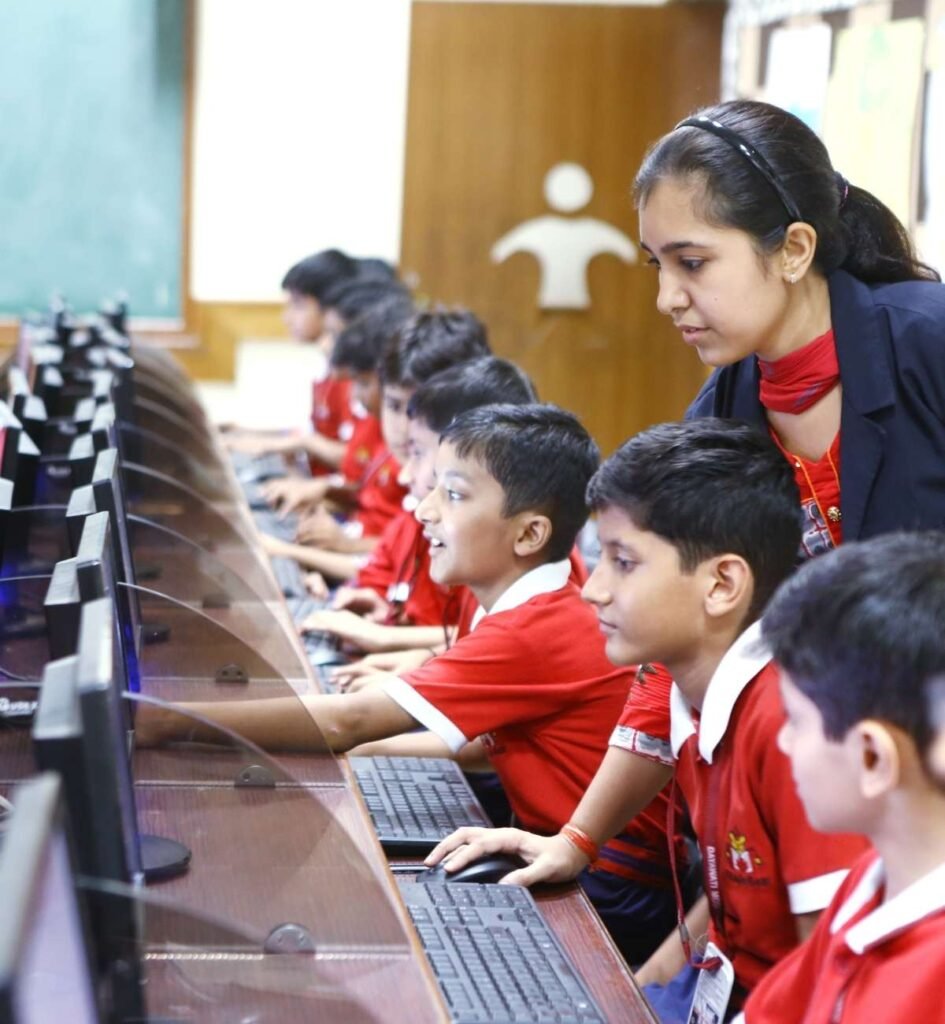
The curriculum specifically covers:
- Understanding data privacy and why it matters
- Responsible use of AI tools — what is acceptable and what is not
- Avoiding academic dishonesty — not copying AI-generated answers
- Recognising bias in AI systems and thinking critically about results
Parents should guide their children to:
- Use AI as a thinking aid, not a shortcut to bypass understanding
- Ask questions about how AI arrives at its answers
- Discuss AI ethics openly at home — what’s fair, what’s private, what’s safe
7. Do Children Need Coding Skills or Expensive Laptops?
The short answer is no — particularly for Classes 3–8.
What Parents Fear | The Reality |
❌ My child needs advanced coding skills | ✅ No coding required in Classes 3–8. Basic computational thinking is taught through activities. |
❌ We need a laptop or tablet at home | ✅ Not required. Most work happens through worksheets, projects, and classroom activities. |
❌ Extra coaching is needed | ✅ Not recommended or necessary. The curriculum is self-contained within school hours. |
❌ Devices are expensive and out of reach | ✅ Schools provide access to required digital tools during school time. |
8. Why CBSE Introduced AI — The Real Reason
The decision to embed AI into the school curriculum from Class 3 is not arbitrary. It is part of a deliberate national strategy aligned with NEP 2020 and the NCF 2023 framework, with three core goals:
- Prepare students for future jobs: The World Economic Forum estimates that over 85 million jobs will be disrupted by AI by 2030. Children in Class 3 today will enter the workforce in the 2030s — CBSE is building them for that world.
- Build core 21st-century skills: Logical thinking, digital literacy, and structured problem-solving are now considered fundamental competencies — not optional extras.
- Treat AI as a life skill: Just as reading, writing, and arithmetic are universal skills — AI literacy is being positioned as the new baseline for an educated citizen in India.
9. Common Myths Parents Should Stop Believing
| ❌ Myth | ✅ Truth |
| ❌ My child needs to learn coding from Class 3 | ✅ No coding required. AI is taught through logic games, activities, and projects — not programming languages. |
| ❌ AI will increase my child’s study pressure | ✅ Completely false. It is activity-based and stress-free, especially in Classes 3–8. |
| ❌ My child’s marks will depend on AI performance | ✅ Not in early classes. There are no AI-specific board exams from Class 3–8. |
| ❌ Extra coaching for AI is necessary | ✅ Not required. The curriculum is fully covered within school hours. |
| ❌ Our school is not ready for AI | ✅ CBSE has trained faculty across affiliated schools. Schools like DMA are already ahead of the curve. |
10. What Parents Should Actually Do
You do not need to become an AI expert. What your child needs from you is simple — and you are already capable of providing it:
- Encourage curiosity at home. Ask your child how everyday things work — this builds the same logical thinking that AI education promotes.
- Allow basic, supervised tech exposure. Let your child explore age-appropriate apps and tools. Supervised screen time is healthy and educational.
- Focus on thinking skills, not marks. In early classes, AI is evaluated through projects and activities — not exams. Celebrate understanding over scores.
- Do not panic or rush into extra classes. No external AI coaching is needed for Classes 3–8. Trust the school.
- Talk about ethical technology use. Have open conversations about what is appropriate when using digital tools and AI assistants.
- Choose a school that is already prepared. Check if your child’s school has smart classrooms, tech-equipped labs, and trained faculty. Dayawati Modi Academy has been integrating AI and technology-driven learning well ahead of the 2026 mandate.
Summary
Key Takeaways for Parents
- AI is compulsory learning from Classes 3–8 — but not a separate subject
- It is activity-based, stress-free, and fully integrated into existing subjects
- Optional as an elective in Classes 9–12 (for now)
- Focus is on skills and thinking — not marks, not coding, not expensive devices
Schools with advanced infrastructure and trained faculty will deliver a far better experience
FAQ - Frequently Asked Questions
Q: Is AI compulsory in CBSE schools from 2026?
Yes. CBSE has made Artificial Intelligence and Computational Thinking compulsory for students from Class 3 to Class 8. It is integrated into existing subjects like Maths, Science, and Languages, and is not taught as a separate subject in these classes.
Q: Will my child have AI exams in Class 3 to 8?
No. There are no board examinations for AI in Classes 3 to 8. Students are assessed through project-based and activity-based evaluations. The focus is on developing thinking skills, creativity, and problem-solving — not on scoring marks in a written exam.
Q: Does my child need to learn coding for the CBSE AI curriculum?
No. Advanced coding is not required in Classes 3 to 8. The curriculum focuses on computational thinking, logical reasoning, and AI awareness through activities, games, and projects. Basic digital exposure is sufficient.
Q: What does CBSE AI curriculum teach in Class 3 to 5?
In Classes 3 to 5, students learn logical thinking through patterns and puzzles, how to break problems into steps (decomposition), and basic concepts of how computers process information. Teaching happens through games, stories, and activities — approximately 50 hours per year.
Q: Is Dayawati Modi Academy in Meerut prepared for the CBSE AI curriculum?
Yes. Dayawati Modi Academy, Meerut, Uttar Pradesh — a leading CBSE school — has been integrating technology-driven learning, smart classrooms, and AI-focused activities well ahead of the 2026 mandate. Parents can visit dma1.in to explore the school’s infrastructure and academic programmes.
Q: Do I need to buy a laptop or computer for my child's AI lessons?
No. Expensive devices are not required at home for Classes 3–8. Schools provide access to the required digital tools during school hours. Most AI learning in early classes happens through worksheets, group activities, and classroom-based projects.
Q: Is AI available as a subject in Class 11 and 12 under CBSE?
Yes. CBSE offers AI as an optional subject in Classes 11 and 12, similar to Informatics Practices. It covers topics like machine learning basics, data handling, and ethics in AI — making it a strong foundation for students interested in technology, engineering, or data science.

Official updates, results, and insights from Dayawati Modi Academy — Best CBSE School in Meerut since 1981.
Previous post
Top 10 Factors Parents Should Consider Before School Admission in Meerut (2026 Guide)
You may also like
Best School in Meerut 2026 | Why DMA Tops Every List