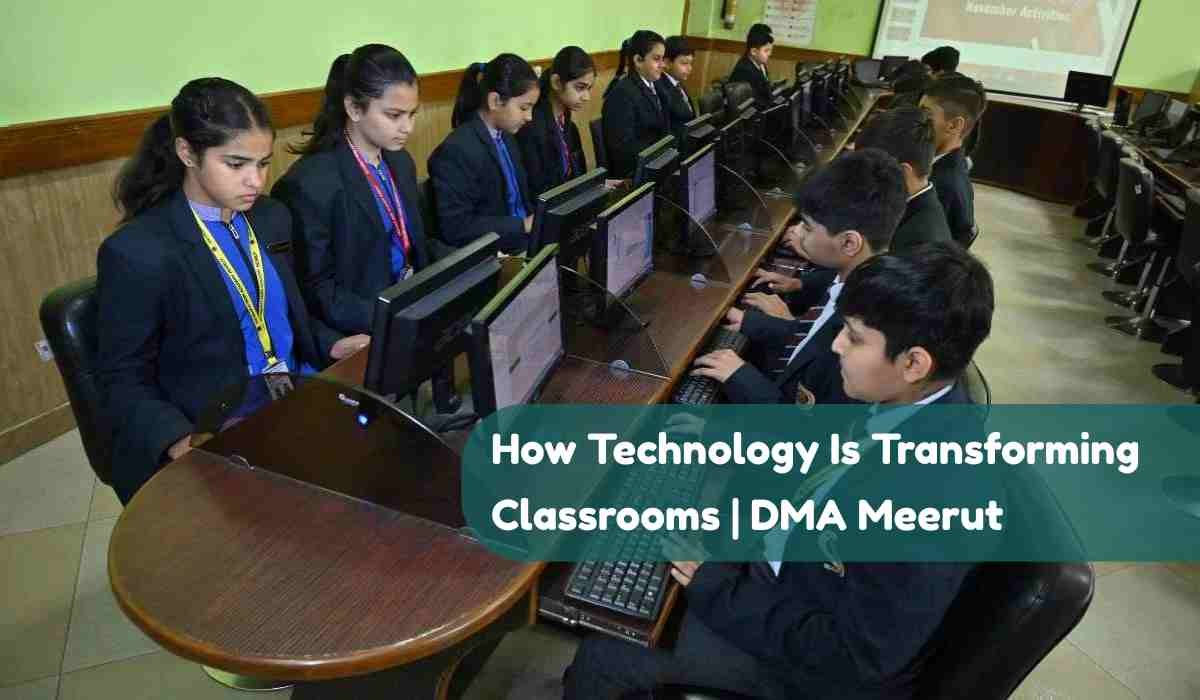
How Technology Is Transforming Classrooms | DMA Meerut
Introduction: The Classroom of 2026 Looks Nothing Like It Did a Decade Ago
Technology has brought a revolutionary transformation to nearly every sector, and education in India is no exception. Over the past decade, classrooms have evolved from traditional chalk-and-board instruction into dynamic, digital, and immersive learning environments. This shift has made education more interactive, accessible, and effective — not just in metro cities but increasingly in Tier-2 cities like Meerut and across Western Uttar Pradesh.
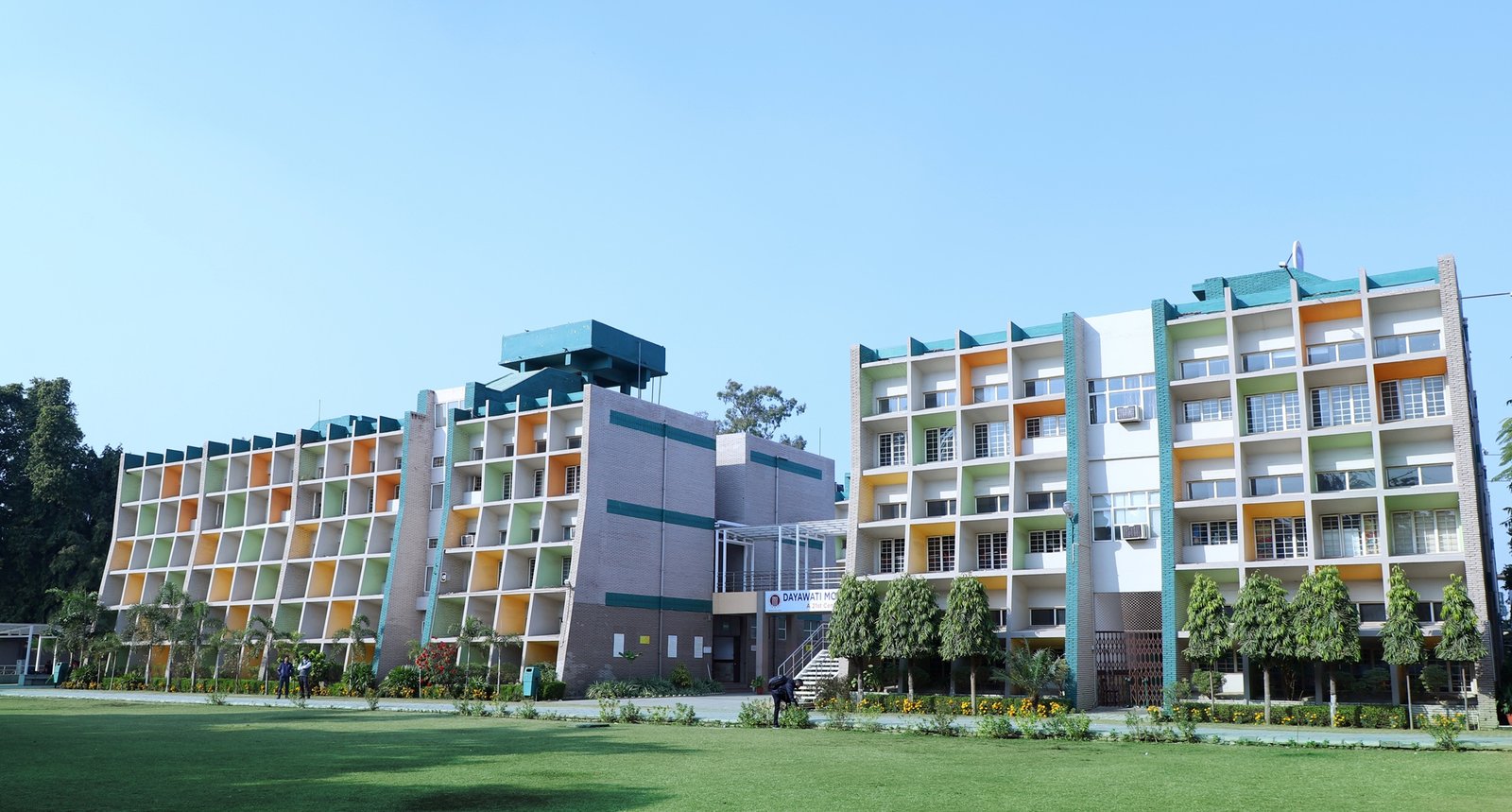
At Dayawati Modi Academy (DMA), Meerut — one of Western UP’s most respected CBSE schools with over 46 years of educational excellence — technology integration is not a buzzword. It is a deliberate, student-centred practice woven into daily learning. From smart classrooms and virtual labs to AI-powered personalised learning, DMA is committed to ensuring that every student is not just examination-ready, but genuinely future-ready.
This guide explores how technology is reshaping classrooms across India, how DMA is leading that transformation in Meerut, and what parents and students need to understand about this exciting educational revolution. For more on DMA’s forward-looking philosophy, read our blog on Future-Ready Learning at DMA.
How Is Technology Transforming Classrooms in India?
Technology is transforming classrooms in India by replacing passive, lecture-only learning with active, multi-sensory, and personalised educational experiences.
Key transformations include:
- Smart Classrooms: Digital boards, projectors, and multimedia replacing chalk-and-board teaching
- Virtual & Augmented Reality (VR/AR): Immersive tools enabling virtual field trips and 3D learning
- AI-Powered Personalised Learning: Platforms that adapt to each student’s pace and learning style
- Virtual Labs: Online experiment platforms allowing science exploration beyond physical lab limitations
- EdTech Platforms: DIKSHA, BYJU’S, Khan Academy providing curriculum-aligned digital content
- Coding & Robotics: Developing computational thinking through platforms like Scratch and LEGO Mindstorms
- Digital Inclusion: Reaching rural and remote students through e-content and digital classrooms
At DMA, all of these technologies are part of a structured academic program that integrates digital tools purposefully — not just as novelty, but as genuine pedagogical enhancement.
1. Smart Classrooms: Where Every Lesson Comes Alive
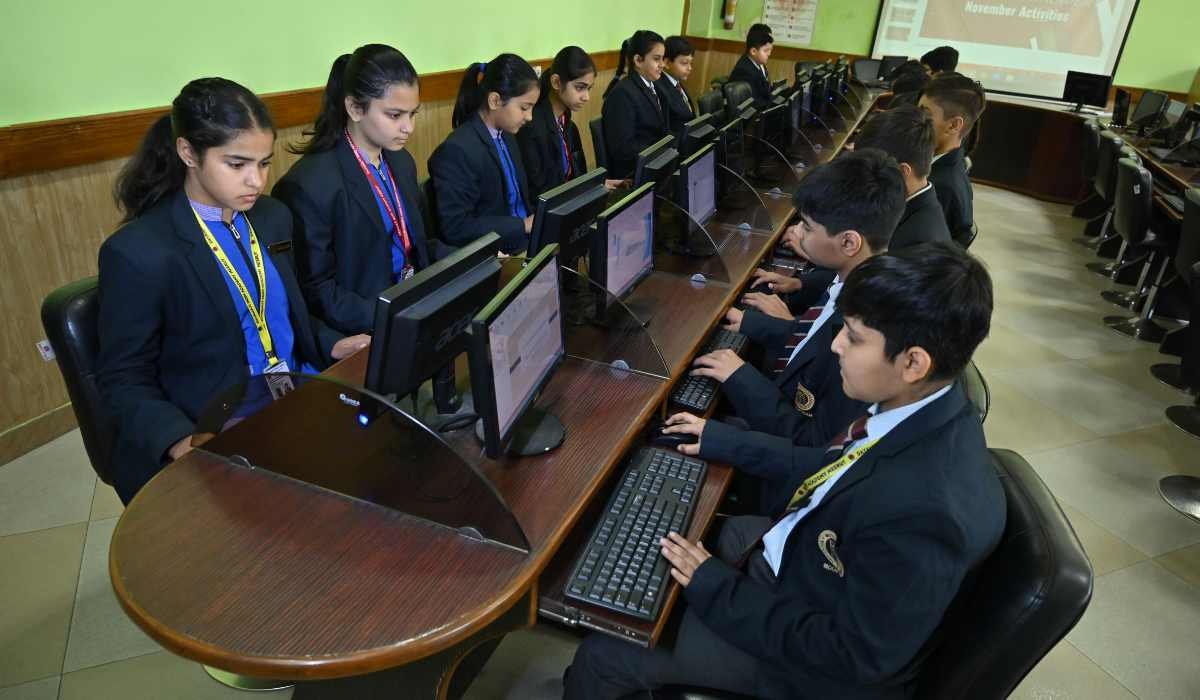
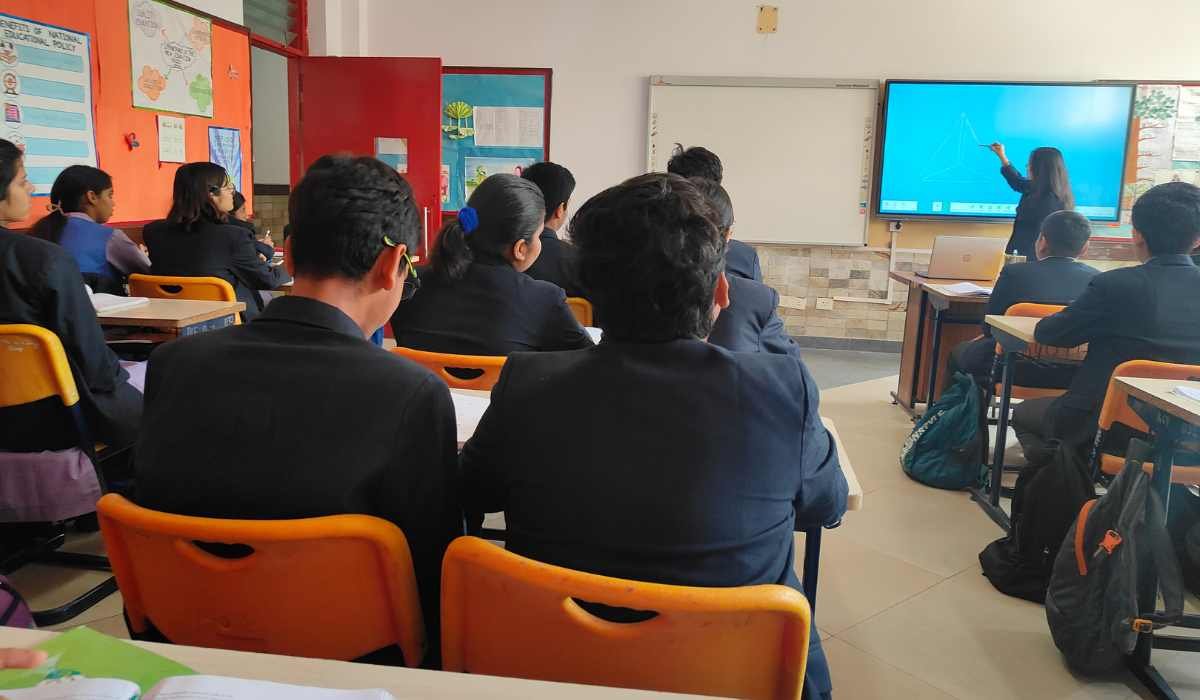
One of the most visible changes in India’s modern schools is the rise of the smart classroom. Schools across the country are replacing traditional blackboards with interactive digital boards, high-definition projectors, and multimedia audio-visual systems. This shift transforms the teacher-student dynamic from passive delivery to active, two-way engagement.
At DMA, our state-of-the-art infrastructure includes smart classroom technology that enables teachers to deliver lessons through educational animations, interactive presentations, and real-time demonstrations. Audio-visual tools help students understand abstract or complex concepts — from photosynthesis to quadratic equations — through visual storytelling rather than rote memorisation.
Platforms like YouTube Education and Khan Academy provide high-quality video lessons for Mathematics and Science, allowing students to revisit difficult concepts independently — at school or at home. This multi-modal approach to learning is at the heart of what makes The DMA Edge different from conventional schooling.
2. EdTech Tools for Mathematics and Science: Learning by Doing
Technology has delivered a powerful suite of subject-specific tools that make the teaching of Mathematics and Science more intuitive, visual, and exploratory — disciplines that have traditionally been sources of anxiety for many students.
Mathematics: From Confusion to Clarity
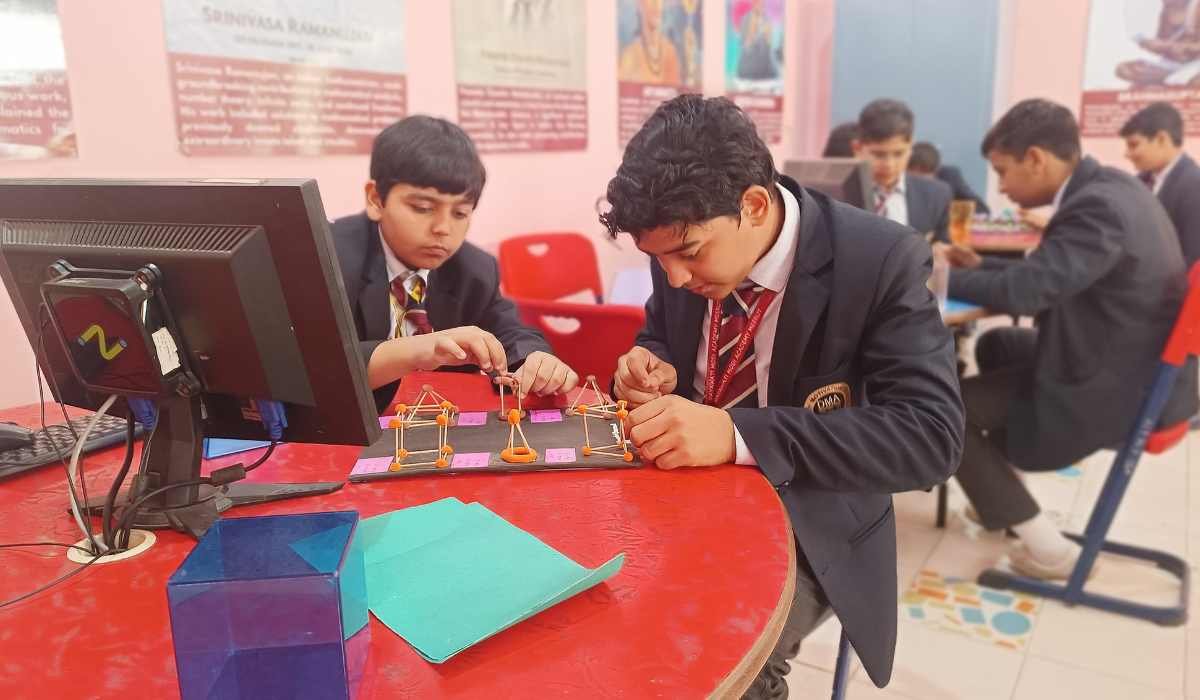
Apps like GeoGebra allow students to visualise graphs, geometry, and algebraic concepts interactively — making abstract ideas tangible. A student who struggles to understand the relationship between a function and its graph can manipulate it in real time and see the connection instantly. Similarly, platforms like BYJU’S and Toppr provide step-by-step solutions, adaptive practice, and performance tracking that keep students engaged and progressing.
At DMA, our dedicated Mathematics and Science labs integrate these digital tools into structured lab sessions, bridging the gap between textbook theory and real-world application.
Science: Virtual Labs That Break Physical Boundaries
Not every school in India can afford fully equipped chemistry, biology, or physics labs — especially in Tier-2 cities and rural areas. Virtual lab platforms like PhET Interactive Simulations allow students to perform complex experiments online with digital precision — from simulating electrical circuits to dissecting virtual frogs — without the constraints of equipment, chemicals, or safety risks.
DMA students benefit from both — world-class physical lab facilities AND access to virtual simulation tools, ensuring maximum conceptual depth and scientific curiosity.
3. Virtual Reality (VR) and Augmented Reality (AR): Education Without Walls
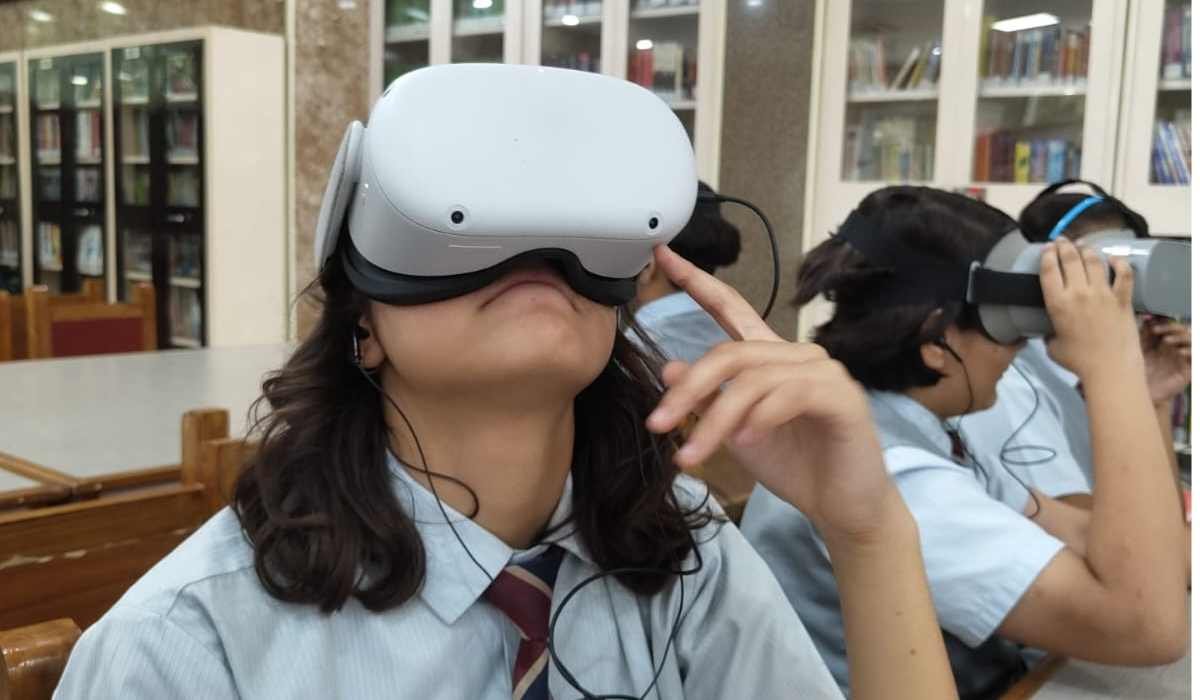
Perhaps the most exciting frontier in modern education is the integration of Virtual Reality (VR) and Augmented Reality (AR) into classrooms. These technologies transport students beyond the four walls of the classroom and into immersive, three-dimensional learning experiences that are simply impossible with textbooks alone.
Tools like Google Expeditions allow students to take virtual field trips to the surface of Mars, the depths of the Great Barrier Reef, or the ruins of ancient Rome — all from their classroom seat. Merge Cube enables students to hold and rotate 3D models — human organs, molecular structures, planetary systems — using AR technology on a tablet or phone.
At DMA, immersive learning experiences are part of our commitment to making education memorable and meaningful. When students experience enrichment activities that blend real-world exploration with digital immersion, the boundary between learning and discovery dissolves. Research consistently shows that immersive, experiential learning dramatically improves both comprehension and long-term retention.
4. Artificial Intelligence & Personalised Learning: Every Student's Individual Journey
One of the most transformative gifts of modern educational technology is the ability to personalise learning at scale. Artificial Intelligence (AI) embedded in EdTech platforms can track individual student performance, identify knowledge gaps, adjust the pace of content delivery, and suggest targeted improvement strategies — all in real time.
This means a Class 9 student at DMA who is strong in Algebra but needs extra support in Geometry will receive a different learning pathway than a classmate with the opposite profile. Rather than one-size-fits-all instruction, AI enables truly personalised education. Platforms like BYJU’S, Vedantu, and Toppr already deploy these AI engines for lakhs of students across India.
This aligns perfectly with DMA’s educational philosophy — championed by Principal Dr. Ritu Dewan — that every child’s unique potential deserves to be recognised and nurtured individually. Combined with our dedicated academic programs, AI-powered tools ensure students are always learning at their optimal level.
Government Initiative: DIKSHA Platform
The Government of India’s DIKSHA (Digital Infrastructure for Knowledge Sharing) platform is a landmark initiative that provides e-books, curriculum-aligned videos, practice exercises, and interactive content — free of cost — for all CBSE and state board students. DMA actively encourage
s students and parents to leverage DIKSHA as a supplementary resource, especially for Class X and Class XII board preparation. DIKSHA complements our Board Exam Preparation Guide for students preparing for high-stakes examinations.
5. Coding, Robotics & 21st-Century Skill Development
Modern classrooms are no longer just about content consumption — they are about creation, problem-solving, and computational thinking. Coding and robotics programs are equipping students with the digital literacy and logical reasoning skills that will define career success in the 21st century.
Platforms like Scratch (MIT Media Lab) make programming accessible and engaging for young learners — using visual, block-based coding to create interactive stories, games, and animations. At the senior level, Python, JavaScript, and data science fundamentals are entering school curricula.
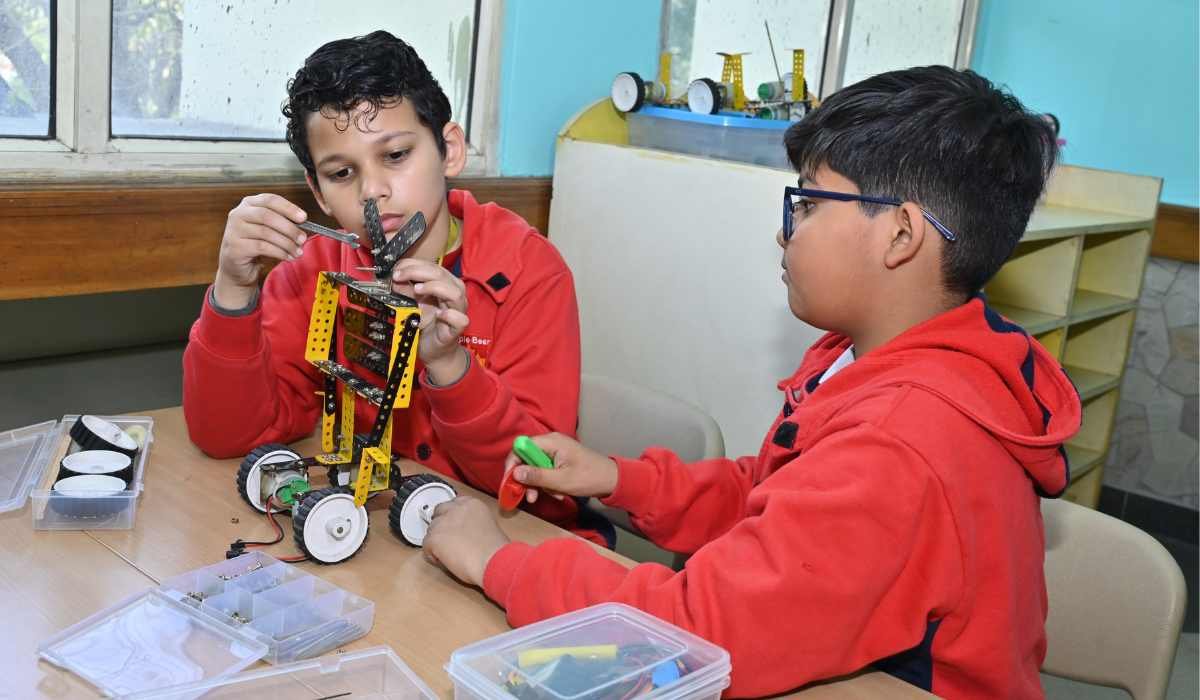
At DMA, skill-based learning is a pillar of our educational approach. Our enrichment activities include coding workshops, STEM competitions, robotics challenges, and entrepreneurship programs that develop the very skills employers prioritise in 2026: creativity, critical thinking, collaboration, and digital fluency. These skills do not just build better students — they build better citizens and professionals.
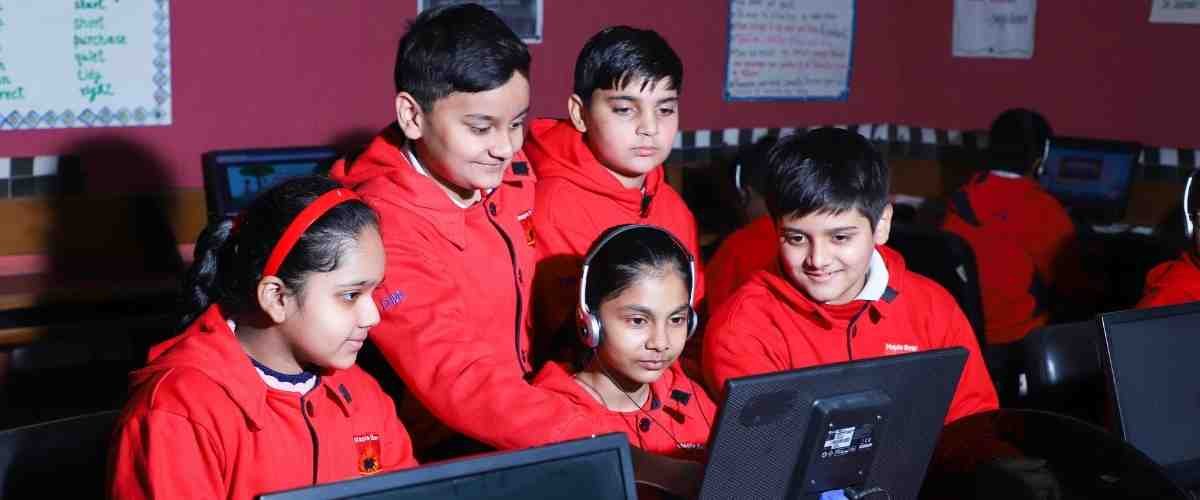
For students interested in technology careers, early exposure to coding at DMA can be a powerful starting point. Our career guidance blog resources explore pathways in AI, software development, data science, and more.
Technology in Classrooms: The Meerut & Western UP Landscape (2026)
Meerut occupies a strategic position in Western Uttar Pradesh’s educational landscape. As the home of some of UP’s top CBSE institutions, Meerut is at the forefront of EdTech adoption in the region — even as significant disparities persist between private and government schools, and between urban and rural areas.
| City / Area | EdTech Adoption | Key Observations |
|---|---|---|
| Meerut — Top Private Schools | High | Smart boards, AV labs, coding programs; DMA leads with integrated tech in all classrooms |
| Meerut — Govt Schools | Low–Moderate | Digital boards in select schools; DIKSHA usage growing; hardware and connectivity gaps persist |
| Modipuram / DMA Area | Very High at DMA | Full smart classroom integration; labs, enrichment tech, AR/VR tools; model for Western UP |
| Noida / Greater Noida | Very High | Tier-1 EdTech adoption; startup ecosystem influence; strong coding and AI curricula |
| Ghaziabad | High | CBSE private school tech adoption strong; e-learning platforms widely used |
| Muzaffarnagar / Saharanpur | Moderate | Growing private school adoption; government school gap significant; internet reliability issues |
| Rural Western UP | Low | Critical infrastructure gap; government digital schemes active but underutilised; mobile learning growing |
Meerut’s top CBSE schools — led by institutions like Dayawati Modi Academy — are demonstrating that world-class EdTech implementation is achievable in Tier-2 cities. The National Education Policy (NEP) 2020 mandates technology integration, vocational learning, and computational thinking from Class 6 onwards — creating both a framework and urgency for schools across India.
For students in government schools and rural areas, the Government’s DIKSHA platform and the CBSE academic resources portal provide free, curriculum-aligned digital content accessible on any smartphone.
6. Bridging the Urban-Rural Divide: Technology as the Great Equaliser
One of the most profound promises of educational technology is its potential to democratise access to quality learning. For decades, students in rural UP and Tier-2 cities faced a stark disadvantage compared to their peers in metro cities: fewer experienced teachers, limited lab resources, outdated curricula, and no access to competitive exam coaching.
Digital classrooms, online content libraries, and government platforms are changing this equation. A student in a village near Meerut can now access the same DIKSHA video lecture, the same PhET simulation, and the same Khan Academy tutorial as a student in Delhi — provided they have a device and internet access.
At DMA, our scholarship programs ensure that cost is not a barrier to accessing quality, tech-enabled education. We believe that every child — regardless of economic background — deserves to experience the transformative power of modern learning tools.
The Government’s PM eVIDYA initiative and Skill India Mission are further accelerating digital inclusion, bringing e-content to remote classrooms through DTH TV channels, radio, and digital devices distributed under schemes like PM POSHAN and the National Digital Literacy Mission.
7. Teacher Training & Digital Pedagogy: The Human Element of EdTech
Technology is only as powerful as the educator who wields it. The most important factor determining whether a smart classroom delivers real learning outcomes is a well-trained, digitally confident, and pedagogically skilled teacher. This is why teacher professional development is as critical as the technology itself.
At DMA, our dedicated and trained staff undergo regular digital pedagogy training, ensuring that smart tools are used to enhance — not replace — the irreplaceable human connection between teacher and student. As Principal Dr. Ritu Dewan emphasises, technology at DMA serves the child’s growth, never the other way around.
The CBSE and NCERT provide ongoing teacher training programs specifically focused on integrating digital tools into CBSE classrooms — programs that DMA teachers actively participate in to stay at the cutting edge of modern pedagogy.
Challenges: Honest Reflections on India's EdTech Journey
While technology’s impact on education is overwhelmingly positive, an honest assessment must acknowledge the challenges that remain — particularly in a country as diverse and complex as India.
- Device & Connectivity Gaps: Not all students have access to smartphones, tablets, or reliable internet — especially in rural UP and lower-income urban households
- Infrastructure Disparity: Smart classroom benefits are concentrated in private schools; government schools lag significantly in hardware and technical support
- Teacher Training Deficits: Inadequate digital training for teachers in many schools undermines the effectiveness of even the best EdTech tools
- Screen Fatigue: Excessive device use without structured offline balance can negatively affect student attention spans and well-being
- Content Quality Variance: Not all digital content is pedagogically sound; schools must curate carefully rather than adopt uncritically
At DMA, we address these challenges through thoughtful implementation — balancing screen-based learning with physical labs, sports, arts, and enrichment activities that ensure holistic development. Technology is a powerful tool — but at DMA, the child’s complete growth always comes first.
Technology in the Classroom: Key Benefits at a Glance
| Technology / Tool | Benefit for DMA Students |
|---|---|
| Smart Boards & AV Tech | Makes lessons visual, interactive, and far more engaging than traditional methods |
| GeoGebra & Math Apps | Brings abstract Mathematics to life through interactive graphs and geometry tools |
| PhET Virtual Labs | Enables safe, unlimited science experiments beyond physical lab constraints |
| Google Expeditions / AR | Immersive VR/AR field trips that improve comprehension and long-term memory retention |
| AI-Powered Platforms | Personalised learning pathways that adapt to each student's pace, strength, and gap areas |
| DIKSHA (Govt. Platform) | Free, curriculum-aligned e-content accessible 24/7 on any device — ideal for board exam prep |
| Coding (Scratch / Python) | Builds computational thinking, logical reasoning, and creativity — core 21st-century skills |
| Digital Assessments | Instant feedback loops that help students identify and correct errors faster than paper tests |
FREQUENTLY ASKED QUESTIONS — FAQ
Q: How is DMA Meerut using technology in its classrooms?
A: Dayawati Modi Academy (DMA), Meerut integrates technology across all classes through smart classrooms with digital boards and AV tools, virtual labs, coding and robotics programs, AI-powered learning platforms, and enrichment activities that include STEM and digital learning components. DMA’s state-of-the-art infrastructure ensures students learn in a future-ready environment. Explore more at dma1.in/the-dma-edge.
Q: What are smart classrooms and how do they help students?
A: Smart classrooms use digital boards, interactive projectors, and multimedia tools to replace traditional chalk-and-board teaching. They make lessons visual, interactive, and multi-sensory — helping students understand complex concepts more easily, stay engaged, and retain information better. At DMA, smart classroom technology is integrated across all academic levels from primary to senior secondary.
Q: What EdTech platforms do schools in India use in 2026?
A: Top EdTech platforms used in Indian schools in 2026 include DIKSHA (Government of India’s free e-learning platform), BYJU’S, Vedantu, Khan Academy, PhET Interactive Simulations for virtual science labs, GeoGebra for mathematics, Scratch for coding, and Google Expeditions for VR learning. DMA students have guided access to these platforms as part of structured academic programs.
Q: Does DMA Meerut have coding and robotics programs?
A: Yes. Dayawati Modi Academy’s enrichment activities include coding workshops, STEM challenges, and robotics programs that introduce students to computational thinking, programming logic, and creative problem-solving. These are offered across multiple classes and form part of DMA’s commitment to 21st-century skill development. Learn more at dma1.in/enrichment-activities.
Q: Can students in rural UP access digital learning resources?
A: Yes. The Government of India’s DIKSHA platform (diksha.gov.in) provides free, curriculum-aligned video lessons, e-books, and practice materials accessible on any smartphone — even with limited data. Additionally, PM eVIDYA broadcasts educational content through DTH TV and radio channels, reaching students in areas without internet access. For students in Meerut, DMA’s scholarship programs also help bridge the access gap.
Q: Is VR/AR technology being used in Indian schools?
A: Yes, increasingly. Tools like Google Expeditions allow students to take virtual reality field trips to historical sites, scientific landmarks, and outer space. Augmented Reality tools like Merge Cube let students interact with 3D models of planets, human organs, and molecules. These immersive technologies are most effective when integrated purposefully into lessons, as DMA does through its enrichment and lab programs.
Q: How does AI personalise learning for school students?
A: AI-powered EdTech platforms track each student’s performance, identify knowledge gaps, and adjust the difficulty, pace, and type of content they receive. This means two students in the same class can receive different learning pathways based on their individual needs — making education far more effective than one-size-fits-all instruction. Platforms like BYJU’S, Toppr, and Vedantu use AI engines to deliver this personalised experience.
Q: How can parents at DMA support technology-based learning at home?
A: Parents can support EdTech learning by ensuring their child has access to a device and a stable internet connection, exploring free resources like DIKSHA (diksha.gov.in) and Khan Academy together, attending DMA’s parent workshops on digital learning, and maintaining a healthy balance between screen time and physical activities. For guidance, DMA’s team is always available via dma1.in/contact.
Lorem ipsum dolor sit amet, consectetur adipiscing elit. Ut elit tellus, luctus nec ullamcorper mattis, pulvinar dapibus leo.
Conclusion: Technology + Great Teachers + Holistic Values = The DMA Formula for 2026
Technology is transforming classrooms in India — making learning more interactive, inclusive, personalised, and efficient. From smart boards and virtual labs to AI-powered platforms and immersive VR experiences, the digital revolution in education is reshaping what it means to teach and to learn.
But at Dayawati Modi Academy, Meerut, we have always believed in one fundamental truth: technology is a powerful tool, but it can never replace the irreplaceable. The compassionate teacher who notices a struggling student, the mentor who sparks a lifelong passion, the school community that shapes character and values — these cannot be digitised. At DMA, technology enhances these human connections rather than competing with them.
Our commitment to world-class facilities, state-of-the-art labs, enrichment activities, and academic excellence — all powered by the The DMA Edge philosophy — ensures that every DMA student in Meerut graduates not just digitally literate, but genuinely equipped for a dynamic, technology-driven world.

Official updates, results, and insights from Dayawati Modi Academy — Best CBSE School in Meerut since 1981.
Next post
Top 10 Factors Parents Should Consider Before School Admission in Meerut (2026 Guide)
You may also like
AI in Education Schools Still Matter
Best School in Meerut 2026 | Why DMA Tops Every List